
What Is a Catholic Church Service Called? The Holy Sacrifice of the Mass and Liturgical Services
✨ This article was AI edited. Editorial responsibility: WesternChurch.net.
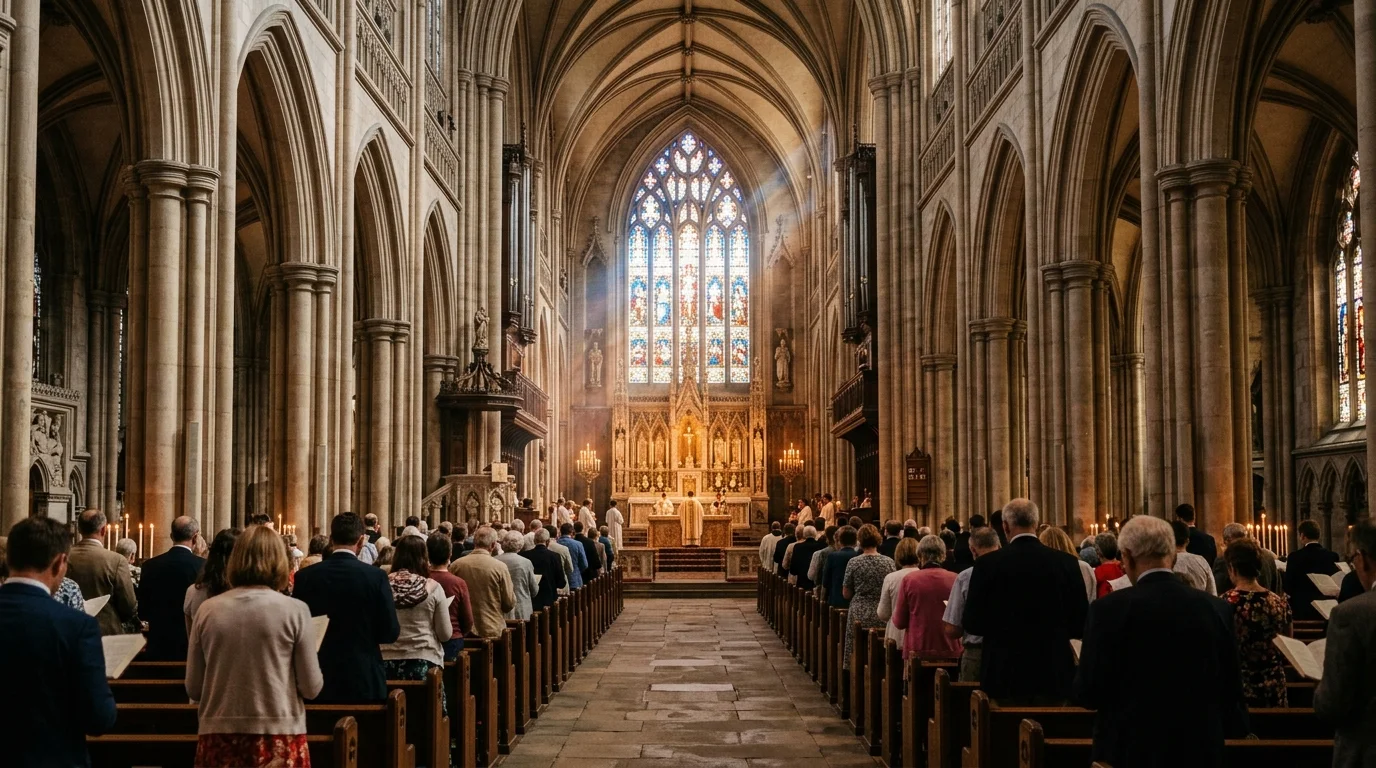
A primary Catholic church service is formally called the “Mass” (or the “Holy Sacrifice of the Mass” and “Celebration of the Holy Eucharist”), while in Eastern Rite Catholic Churches it is known as the “Divine Liturgy.” Beyond the Sunday Mass, Catholic parishes also hold non-Eucharistic liturgical and devotional services, including the Liturgy of the Hours (such as Vespers or Evening Prayer), Eucharistic Adoration and Benediction, Stations of the Cross, and specialized sacramental liturgies such as Nuptial Masses for weddings and Requiem Masses for funerals.
Contents
Etymology: Why Is It Called the “Mass”?
The English word “Mass” originates from the historic Latin ecclesiastical noun missa, derived from the classical Latin dismissal spoken by the priest or deacon at the conclusion of the liturgy: “Ite, missa est” (literally translated as “Go, it is sent” or “Go, the dismissal is made”). Over the centuries, this liturgical formula came to designate the entire sacred action.
In Catholic theology, the dismissal does not merely signify that the service has ended; it represents an apostolic commissioning. Having received Christ in the Word and the Holy Eucharist, the faithful are dismissed and “sent forth” into the secular world to live the Gospel, love their neighbors, and sanctify society through holy action.
| Catholic Service Name | Primary Liturgical Purpose | Sacramental Center | Frequency |
|---|---|---|---|
| The Mass (Holy Eucharist) | The central corporate act of Catholic public worship | Holy Eucharist (Body and Blood of Christ) | Sundays, Holy Days, and daily |
| Divine Liturgy | Eucharistic worship in Eastern Catholic Churches (e.g., Byzantine) | Holy Mysteries / Holy Eucharist | Sundays, feast days, daily |
| Liturgy of the Hours (Divine Office) | The official prayer of the Church consecrating the day’s hours | Psalms, Canticles, and Scripture (Non-Eucharistic) | Seven daily liturgical hours (e.g., Morning/Evening Prayer) |
| Eucharistic Adoration & Benediction | Silent contemplation of Christ present in the exposed Host | Monstrance display followed by blessing with the Blessed Sacrament | Weekly, first Fridays, or perpetual chapels |
| Sacrament of Reconciliation (Confession) | Individual confession of sins and priestly absolution | Sacrament of Penance | Scheduled weekly or by appointment |
| Stations of the Cross (Via Crucis) | Devotional meditation on Christ’s passion and crucifixion | 14 devotional stations along sanctuary walls | Fridays of Lent; Good Friday |
The Two Core Movements of the Catholic Mass
Unlike evangelical or Protestant church services where the centerpiece of the gathering is typically a 45-minute pastoral sermon flanked by contemporary musical sets, every Catholic Mass is systematically organized around two equal, interconnected pillars:
1. The Liturgy of the Word
The first major part of the Mass feeds the faithful from the table of God’s Word. It includes:
- Introductory Rites: Entrance chant or hymn, sign of the cross, penitential act (Confiteor and Kyrie eleison), and the joyful hymn of praise (Gloria).
- First Reading: Typically taken from the Old Testament (or the Acts of the Apostles during the Easter season), highlighting salvation history.
- Responsorial Psalm: Chanted or recited psalm verses with active congregational antiphons.
- Second Reading: Taken from the New Testament Epistles or Revelation.
- Gospel Proclamation: The assembly stands in reverence as the priest or deacon reads directly from the Gospels (Matthew, Mark, Luke, or John), preceded by the sung Alleluia.
- The Homily: A brief pastoral reflection (ordinarily 8 to 15 minutes) explaining how the scriptural readings apply to Christian moral and spiritual life.
- Profession of Faith and Universal Prayer: Recitation of the Nicene Creed followed by the Prayers of the Faithful for the Church, civil leaders, the sick, and the deceased.
2. The Liturgy of the Eucharist
The climax of Catholic worship, this second movement fulfills Christ’s command at the Last Supper to “Do this in memory of me”:
- Preparation of the Gifts (Offertory): Bread and wine mixed with a drop of water are brought to the altar alongside monetary tithes for the poor and church maintenance.
- The Eucharistic Prayer: The presiding priest prays the ancient Eucharistic prayer, including the invocation of the Holy Spirit (epiclesis) and the words of institution. Catholics believe that at this moment, through transubstantiation, the bread and wine become the real, substantial Body and Blood of Jesus Christ.
- Communion Rite: The Lord’s Prayer (Our Father), the Sign of Peace, the breaking of the bread (Agnus Dei), and the distribution of Holy Communion to prepared faithful.
- Concluding Rites: Final priestly blessing and dismissal.
Varieties of Mass: Sunday, Daily, and Sacramental Rites
Depending on the liturgical calendar and pastoral occasion, the Mass takes several distinct forms:
- Sunday Mass: The weekly obligation for all baptized Catholics, fulfilling the Third Commandment. Parishes often offer Saturday evening “Vigil Masses” (or Anticipated Masses) after 4:00 PM, which canonically satisfy the Sunday obligation.
- Daily Mass: A shorter, quiet Mass celebrated on weekday mornings or evenings, typically lasting 25 to 35 minutes, featuring fewer musical elements and a single reading prior to the Gospel.
- Nuptial Mass: A full Catholic Mass in which the Sacrament of Holy Matrimony is conferred between a bride and groom during the ceremony.
- Requiem / Funeral Mass: A solemn Mass offered for the repose of the soul of a deceased Christian, characterized by white or violet vestments, prayers for mercy, and the censing of the casket with holy water and incense.
- Chrism Mass: Celebrated during Holy Week by the diocesan bishop alongside all local clergy, where holy oils (Oil of the Sick, Oil of Catechumens, and Sacred Chrism) used for sacramental anointings across the entire diocese are consecrated.
Visitor Guide: Etiquette for Non-Catholics
If you are not Catholic and are attending a Catholic church service for a wedding, funeral, or Sunday visit with friends, here is what you need to know:
- Standing, Kneeling, and Sitting: Catholics change posture frequently during Mass. As a general guide: stand during prayers and the Gospel, sit during the readings and homily, and kneel during the Eucharistic consecration. As a guest, you are welcome to follow along or remain quietly seated in your pew.
- Holy Communion Protocol: Because the Catholic Church practices closed communion (reflecting full doctrinal unity in the Real Presence), guests who are not Catholic or Catholics who have not prepared through sacramental confession do not receive the consecrated Host. Non-Catholics may either remain in their pew in prayer or join the communion line with their arms crossed over their chest (hands on opposite shoulders) to receive a priestly blessing.
- Reverence and Sanctuary Silence: Catholic churches house the Blessed Sacrament in the sanctuary tabernacle (indicated by a burning red sanctuary lamp). Visitors are asked to speak in quiet whispers and turn off mobile phones to respect the quiet contemplation of worshippers.
Frequently Asked Questions
Is a Catholic service called a church service or a Mass?
Catholics specifically call their primary worship gathering the “Mass.” Calling it a “church service” is understood colloquially, but within the Catholic tradition, the term “Mass” denotes its distinct Eucharistic and sacrificial theology.
How long does a Catholic Mass last?
A typical Sunday Catholic Mass lasts between 50 and 65 minutes. Weekday daily Masses are much shorter, usually taking 25 to 35 minutes.
What is the Saturday evening Catholic service called?
The Saturday evening service is called the “Vigil Mass” or “Sunday Anticipated Mass.” Canon law permits Catholics to fulfill their Sunday worship obligation by attending Mass on Saturday evening after 4:00 PM.
Can a non-Catholic attend a Catholic Mass?
Yes. Non-Catholics are always welcome to attend and observe any Catholic Mass. Guests can sing, pray, and participate in the liturgy, with the exception of receiving Holy Communion.
Get our latest guides, news, and insights highlighted in your Google Search & AI Overviews.


 URGENT: THIS PAGE COULD DISAPPEAR!