
Is Masturbation a Sin in the Catholic Church? The 3 Conditions & Finding Peace
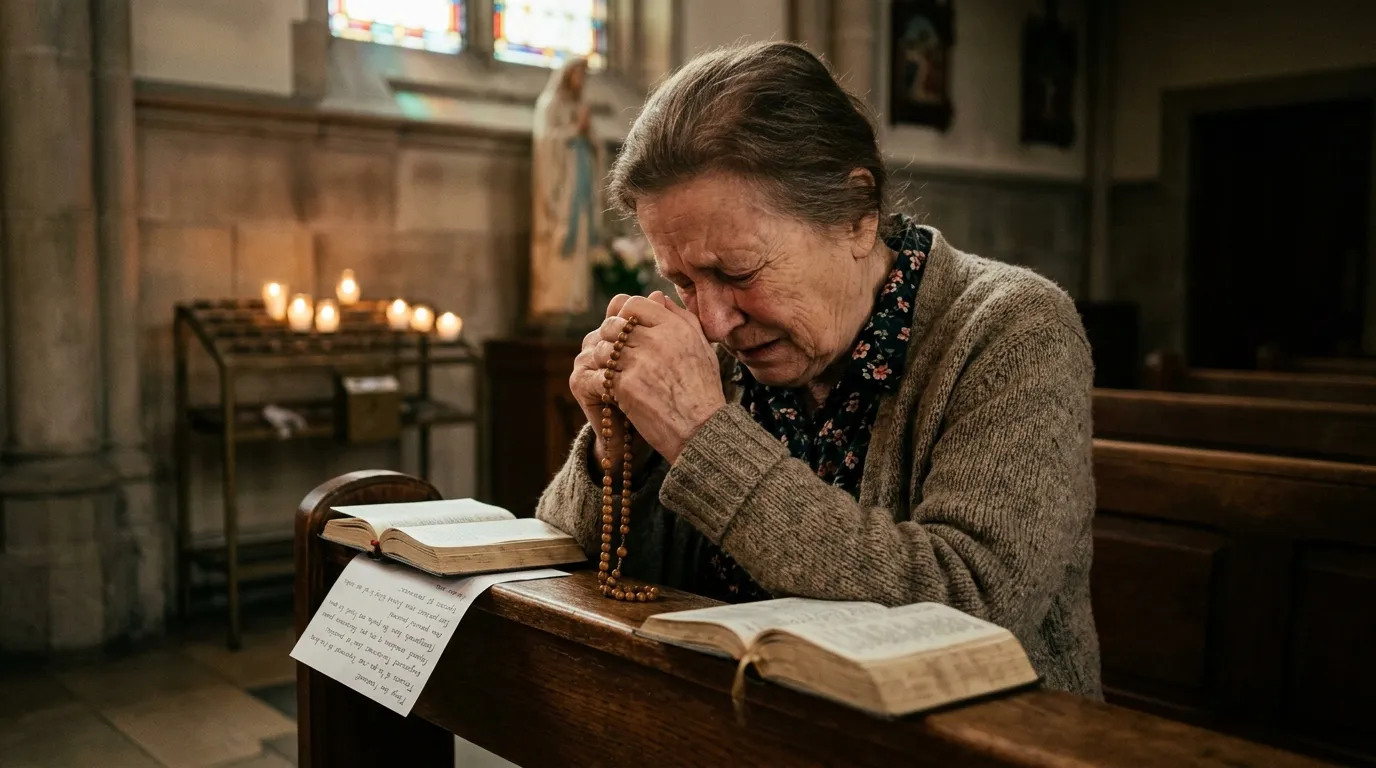
Many young Catholics and faithful individuals find themselves carrying a profound burden of guilt, wondering in silence: Is masturbation a sin in the Catholic Church? If you are struggling with this deeply personal habit, you are not alone, and you are not beyond God’s mercy. The fear of being in a state of mortal sin can be paralyzing, leading to intense spiritual anxiety and a feeling of separation from the love of Christ.
The Church understands this struggle not just as a moral failing, but as a deeply human wound that requires profound pastoral compassion and healing.
You might be confused about whether your actions have completely severed your relationship with God or if they fall under a different category of sin. The Catechism of the Catholic Church provides clear guidance, not to condemn, but to illuminate the path toward spiritual freedom and the Sacrament of Reconciliation.
It distinguishes between the objective nature of an act and the subjective reality of the person committing it, offering a nuanced approach that considers the weight of human frailty.
Understanding the difference between mortal sin and venial sin—and the specific conditions required for a sin to be truly mortal—is the first step toward finding peace. By examining the three conditions of mortal sin and exploring how factors like deeply ingrained habits or psychological struggles affect your culpability, you can approach your faith with clarity rather than fear.
Let’s explore what the Church actually teaches about this sensitive topic and how you can find the forgiveness and healing you seek.
Contents
- Is Masturbation a Mortal Sin in the Catholic Church?
- The 3 Conditions for Mortal Sin: Grave Matter, Full Knowledge, and Deliberate Consent
- How Habit, Addiction, and Psychological Factors Affect Deliberate Consent
- The Link Between Pornography and Impurity
- Actionable Steps for Confession and Seeking Healing
- Finding Grace: Moving Forward in the Catholic Faith
- Frequently Asked Questions
Is Masturbation a Mortal Sin in the Catholic Church?
When addressing whether masturbation is a mortal sin, it is essential to first look at the objective teaching of the Catholic Church. According to the Catechism of the Catholic Church, masturbation is considered an intrinsically and gravely disordered action.
This means that, objectively speaking, the act involves grave matter because it contradicts the purpose of human sexuality, which the Church teaches is designed for both the unitive love between spouses and the procreative openness to new life.
However, acknowledging that an action involves grave matter does not automatically mean that a mortal sin has been committed. The Church makes a critical distinction between the objective gravity of an act and the subjective culpability of the individual.
For a sin to be mortal, and thus completely sever one’s relationship with God’s grace, it must meet three specific criteria simultaneously. If even one of these conditions is missing or compromised, the sin may be considered a venial sin, which wounds but does not destroy charity in the heart.
Pastoral care in the Catholic tradition emphasizes that God looks at the whole person. While the moral law remains clear, the application of that law is steeped in mercy.
A faithful Catholic is called to strive for purity, but also to recognize that the journey often involves stumbling. The Church encourages the faithful to seek understanding rather than despair, recognizing that the struggle against impurity is a common human experience that requires ongoing grace and perseverance.
The 3 Conditions for Mortal Sin: Grave Matter, Full Knowledge, and Deliberate Consent
To fully grasp whether an act of masturbation constitutes a mortal sin, you must evaluate it against the three conditions that define mortal sin in Catholic theology. The absence of any single condition changes the nature of the sin.
First, the act must involve grave matter. As established by the Catechism, masturbation is objectively a grave matter because it misdirects the gift of human sexuality away from its intended marital and life-giving purposes.
This is the objective baseline of the moral evaluation.
Second, the action must be committed with full knowledge. This means that the individual must know that the act is seriously wrong and contrary to God’s law before committing it.
If someone is genuinely ignorant of the Church’s teaching on this issue, their culpability is reduced. However, feigned ignorance or willful refusal to learn what is true does not diminish responsibility.
Third, the act requires deliberate consent. This is often the most complex condition to evaluate.
Deliberate consent means that the individual freely and intentionally chooses to commit the sin. It requires a personal, uncoerced decision of the will.
If the will is compromised by external or internal pressures, the level of deliberate consent is fundamentally altered, meaning the sin may not meet the threshold of a mortal sin.

How Habit, Addiction, and Psychological Factors Affect Deliberate Consent
The Catholic Church exercises profound psychological insight and pastoral sensitivity when evaluating deliberate consent. The Catechism explicitly states that in forming an equitable judgment about a person’s moral responsibility regarding masturbation, one must take into account affective immaturity, force of acquired habit, conditions of anxiety, and other psychological factors or social influences.
When masturbation becomes an ingrained habit or an addiction, the freedom of the will is significantly diminished. An addiction compels behavior, often bypassing the rational decision-making process.
If a person is fighting against a deeply rooted habit, their falls are often accompanied by immediate regret rather than a deliberate, rebellious rejection of God. In such cases, the Church recognizes that the deliberate consent required for a mortal sin may be lacking.
Psychological factors such as severe stress, depression, trauma, or anxiety can also cloud the intellect and weaken the will. When an individual turns to masturbation as a coping mechanism for emotional pain rather than a deliberate pursuit of sinful pleasure, their culpability is reduced.
This compassionate understanding does not mean the act is suddenly good or justified, but it does mean that the individual is viewed through the lens of a patient undergoing healing, rather than a criminal willfully breaking the law.
The Link Between Pornography and Impurity
In the modern world, the struggle with masturbation is frequently linked to pornography. The Catholic Church teaches that viewing pornography is also a grave matter.
It deeply harms human dignity by turning people into objects of use rather than subjects of love. When pornography is involved, it often exacerbates the habit of masturbation, creating a cycle of impurity that can be incredibly difficult to break.
Pornography rewires the brain, making the struggle against masturbation an issue of physiological addiction as well as spiritual warfare. The visual stimulation of pornography intensely fuels the habit, making it harder to achieve the purity of heart that Christ calls us to.
Overcoming this often requires cutting off access to explicit materials entirely, recognizing that true freedom requires starving the addiction.
However, the same principles of moral theology apply. If a person is addicted to pornography, their deliberate consent may be compromised.
The path to overcoming this dual struggle involves immense patience, spiritual discipline, and often professional psychological support, all enveloped in the grace of the Sacraments.
Actionable Steps for Confession and Seeking Healing
If you are carrying the weight of guilt, the absolute best place to find peace is in the Sacrament of Reconciliation. Confession is not a courtroom of condemnation; it is a hospital for wounded souls.
When you enter the confessional, you are meeting Christ the Healer.
To prepare for confession, make a sincere examination of conscience. When you confess the sin of masturbation, be honest and concise.
You do not need to share explicit details. You can simply state, “I struggled with masturbation and pornography [number] times.” It is also highly beneficial to mention if this is an ongoing habit or addiction, as it helps the priest understand your level of deliberate consent and offer appropriate pastoral care.
Beyond confession, establishing a plan for healing is vital. This includes developing a daily prayer routine, frequenting the Sacraments of the Eucharist and Reconciliation, and utilizing practical tools like internet filters or accountability partners.
Remember that healing is a process. Do not let a moment of weakness define your relationship with God.
When you fall, immediately make an act of contrition and resolve to return to confession as soon as possible.
Finding Grace: Moving Forward in the Catholic Faith
The journey to purity is rarely a straight line. It is a path marked by striving, falling, and continually relying on the mercy of God.
The Catholic Church does not expect instant perfection, but rather a sincere and persistent effort to grow in holiness. Understanding the conditions of mortal sin—grave matter, full knowledge, and deliberate consent—should not be a source of anxiety, but a framework that reveals the depth of God’s justice and mercy.
By engaging deeply with Catholic traditions and morality, you can fortify your spirit against temptation. Surround yourself with supportive communities, immerse yourself in Scripture, and never doubt the transformative power of forgiveness.
Your identity is not rooted in your sins or your struggles; it is rooted in your baptism as a beloved child of God.
Frequently Asked Questions
Does habit reduce the gravity of the sin of masturbation?
What are the three conditions for a mortal sin?
How should I confess the sin of masturbation?
Is watching pornography considered a mortal sin?
What is the difference between a mortal and venial sin?
Get our latest guides, news, and insights highlighted in your Google Search & AI Overviews.


 URGENT: THIS PAGE COULD DISAPPEAR!