
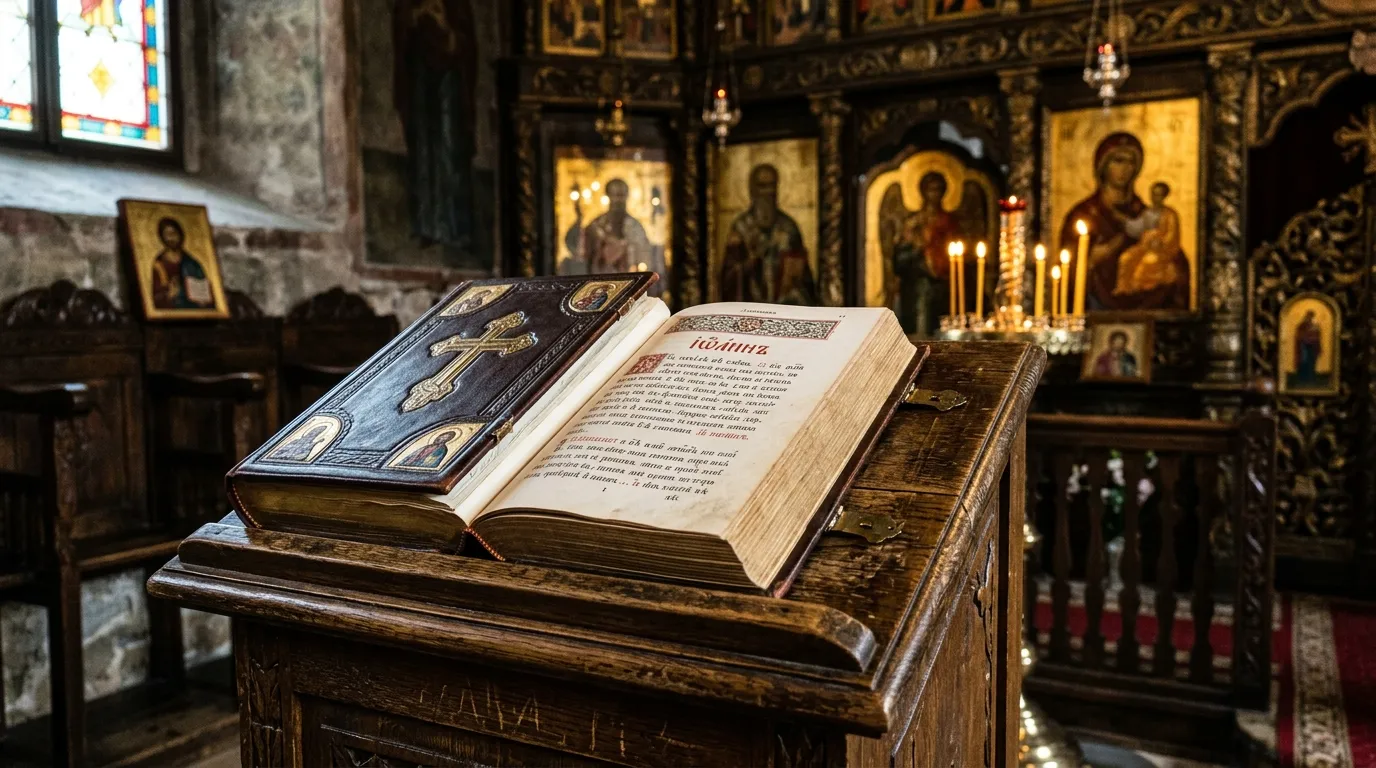
What Bible Do Orthodox Churches Use? The Complete Guide
For Western Christians—whether Roman Catholic or Protestant—opening an Eastern Orthodox Bible for the first time is often an eye-opening revelation. Readers quickly discover books and chapters not found in standard Protestant Bibles, historical names that sound unfamiliar, and a distinctive approach to sacred scripture that dates back unbroken to the earliest days of the undivided apostolic Church.
The question "What Bible do Orthodox churches use?" touches upon profound historical, linguistic, and theological principles. While Protestants rely upon a sixty-six-book canon based on medieval Hebrew Masoretic texts, and Catholics venerate a seventy-three-book canon defined at the Council of Trent, the Eastern Orthodox Church preserves an even broader biblical canon consisting of seventy-five to seventy-six books.
Below is an authoritative, scholarly guide explaining the foundation of the Orthodox Old Testament, the unique textual tradition of its New Testament, and the premier English translations recommended for Orthodox believers and biblical scholars.
Contents
- 1. The Old Testament: The Primacy of the Septuagint (LXX)
- 2. The Anagignoskomena: The Expanded Orthodox Canon
- 3. The New Testament: The Byzantine Text-Type
- Comparative Canon Matrix: Orthodox vs. Catholic vs. Protestant
- Leading English Translations for Orthodox Christians
- Scripture and Holy Tradition: The Orthodox Hermeneutic
- Frequently Asked Questions
1. The Old Testament: The Primacy of the Septuagint (LXX)
The defining characteristic of the Eastern Orthodox Old Testament is its reliance upon the Septuagint (abbreviated LXX). Translated from ancient Hebrew into Koine Greek by Jewish scholars in Alexandria, Egypt, during the third and second centuries BC, the Septuagint was the universal Bible of the Greek-speaking Jewish diaspora and the early Christian Church.
In the New Testament, when Jesus Christ, St. Paul, and the Evangelists quote Old Testament scriptures, more than 80 percent of those citations match the Greek wording of the Septuagint rather than the later Hebrew Masoretic text. Because the Holy Spirit inspired the apostolic authors using the Septuagint, the Orthodox Church regards the Septuagint as the authoritative, providential text of the Old Testament for liturgical worship and doctrinal definition.
2. The Anagignoskomena: The Expanded Orthodox Canon
In Western Christianity, books outside the thirty-nine-book Protestant canon are frequently labeled "Apocrypha" by Protestants or "Deuterocanonical" by Catholics. In the Eastern Orthodox Church, these sacred writings are known as the Anagignoskomena (Greek for "books worthy of being read" or "recognized readings").
Affirmed by historic councils—including the Council of Carthage (397), the Quinisext Council (692), and the Synod of Jerusalem (1672)—the Orthodox Old Testament contains the following texts in addition to the standard Hebrew canon:
- Tobit and Judith: Narrative accounts of God’s providence and personal righteousness.
- 1 and 2 Maccabees: The historic struggle for Jewish religious freedom against Seleucid tyranny.
- 3 Maccabees: Historical narrative of divine deliverance of Egyptian Jews under Ptolemy IV.
- 1 Esdras (3 Ezra in Vulgate): An ancient alternative Greek account of the return from Babylonian exile.
- Wisdom of Solomon and Sirach (Ecclesiasticus): Towering masterpieces of ancient biblical wisdom literature.
- Baruch and the Letter of Jeremiah: Prophetic exilic literature.
- Additions to Daniel and Esther: Including the Prayer of Azariah, the Song of the Three Holy Children, Susanna, and Bel and the Dragon.
- The Prayer of Manasseh: A profound prayer of repentance chanted during Great Compline.
- Psalm 151: An inspired autobiographical psalm attributed to David following his victory over Goliath.
- Note: 4 Maccabees is traditionally included as an appendix in Greek Orthodox Bibles as a philosophical masterpiece on the supremacy of devout reason over passions, though not strictly canonical.
3. The New Testament: The Byzantine Text-Type
Unlike the Old Testament, the Orthodox New Testament contains the identical twenty-seven books recognized across Catholic and Protestant Christianity. However, the textual transmission differs significantly from modern Western translations:
Most contemporary Protestant and Catholic Bibles (such as the ESV, NIV, or NRSV) are translated from modern critical Greek texts (Nestle-Aland / UBS) that rely heavily on ancient fourth-century Egyptian Alexandrian manuscripts (such as Codex Sinaiticus and Codex Vaticanus). In contrast, the Eastern Orthodox Church bases its New Testament on the Byzantine (Majority) Text-Type—the living, continuous liturgical manuscript tradition copied and preserved by scribes in the Greek-speaking churches of Constantinople, Antioch, and Mount Athos throughout the Middle Ages.
As a result, Orthodox New Testaments preserve historic readings that modern Western critical translations often omit or bracket, such as the traditional ending of Mark (Mark 16:9–20) and the account of the woman taken in adultery (John 7:53–8:11).
Comparative Canon Matrix: Orthodox vs. Catholic vs. Protestant
The following table illustrates the structural differences across major Christian biblical canons:
| Biblical Section / Book | Eastern Orthodox Canon | Roman Catholic Canon | Protestant Canon |
|---|---|---|---|
| Protestant Old Testament (39 Books) | Included (via Septuagint) | Included (via Vulgate/Hebrew) | Included (Hebrew Masoretic) |
| Tobit, Judith, 1 & 2 Maccabees | Included | Included | Excluded (Apocrypha) |
| Wisdom of Solomon & Sirach | Included | Included | Excluded (Apocrypha) |
| Baruch & Letter of Jeremiah | Included | Included | Excluded (Apocrypha) |
| 1 Esdras & 3 Maccabees | Included | Excluded (Historical Appendix) | Excluded |
| Psalm 151 & Prayer of Manasseh | Included | Excluded (Historical Appendix) | Excluded |
| New Testament (27 Books) | Included (Byzantine Text) | Included (Vulgate / Critical) | Included (Critical / Textus Receptus) |
| Total Book Count | 75 – 76 Books | 73 Books | 66 Books |
Leading English Translations for Orthodox Christians
Because the historic Orthodox Church originated in Greek, Church Slavonic, Arabic, and Romanian liturgical environments, modern English-speaking believers rely upon several trusted translations:
1. The Orthodox Study Bible (OSB)
Published by Thomas Nelson under the auspices of the St. Athanasius Academy of Orthodox Theology, the Orthodox Study Bible is the premier all-in-one edition in the English-speaking world. Its Old Testament is an original translation directly from the Greek Septuagint, while its New Testament utilizes the New King James Version (NKJV), which aligns closely with the Byzantine textual tradition. It features rich liturgical commentary drawn from the early Church Fathers (St. John Chrysostom, St. Basil the Great, St. Athanasius).
2. The Eastern / Greek Orthodox Bible (EOB)
A scholarly translation of the official 1904 Patriarchal text of Constantinople, the EOB provides an exceptionally rigorous, literal rendering of the New Testament with extensive linguistic footnotes comparing Byzantine and Alexandrian variants.
3. Traditional Liturgical Use: KJV and RSV
Many English-speaking Orthodox jurisdictions (such as the Antiochian Archdiocese and Orthodox Church in America) traditionally use the King James Version (KJV) or the Revised Standard Version (RSV) for liturgical readings, prizing their solemn cadence and reverent linguistic beauty.
Scripture and Holy Tradition: The Orthodox Hermeneutic
For Eastern Orthodox Christians, the Bible is not an isolated legal text to be dissected apart from the community that wrote it. Orthodoxy teaches that the Bible is the supreme, inspired jewel within the broader crown of Holy Tradition. Scripture was birthed by the Church, canonized by the Church, and can only be rightly interpreted within the living liturgical, patristic, and sacramental life of the Church under the guidance of the Holy Spirit.
Frequently Asked Questions
Why does the Orthodox Old Testament have more books than the Protestant Bible?
During the 16th-century Reformation, Martin Luther chose to limit the Protestant Old Testament to the shorter Hebrew Masoretic canon established by rabbinic Judaism around AD 90. In contrast, the Eastern Orthodox Church retained the broader Greek Septuagint canon used by the Apostles and early Christians.
Is the Orthodox Study Bible good for non-Orthodox readers?
Yes. Many Catholic and Protestant pastors, students, and historians use the Orthodox Study Bible specifically to study the Septuagint text in English and engage with the theological commentary of the early Church Fathers.
Do Orthodox Christians read the Bible daily?
Yes. The Orthodox liturgical calendar assigns daily Epistle and Gospel readings for every single day of the year, encouraging all faithful believers to immerse themselves continuously in the Word of God.
Explore our broader Orthodox resources: Eastern Orthodox Ecclesiology | Catholic Sacramental Heritage | Biblical Studies Hub.
Get our latest guides, news, and insights highlighted in your Google Search & AI Overviews.

 PROSPERITY PRAYER