
What is a Rectory in the Catholic Church? The Priest’s Home Explained
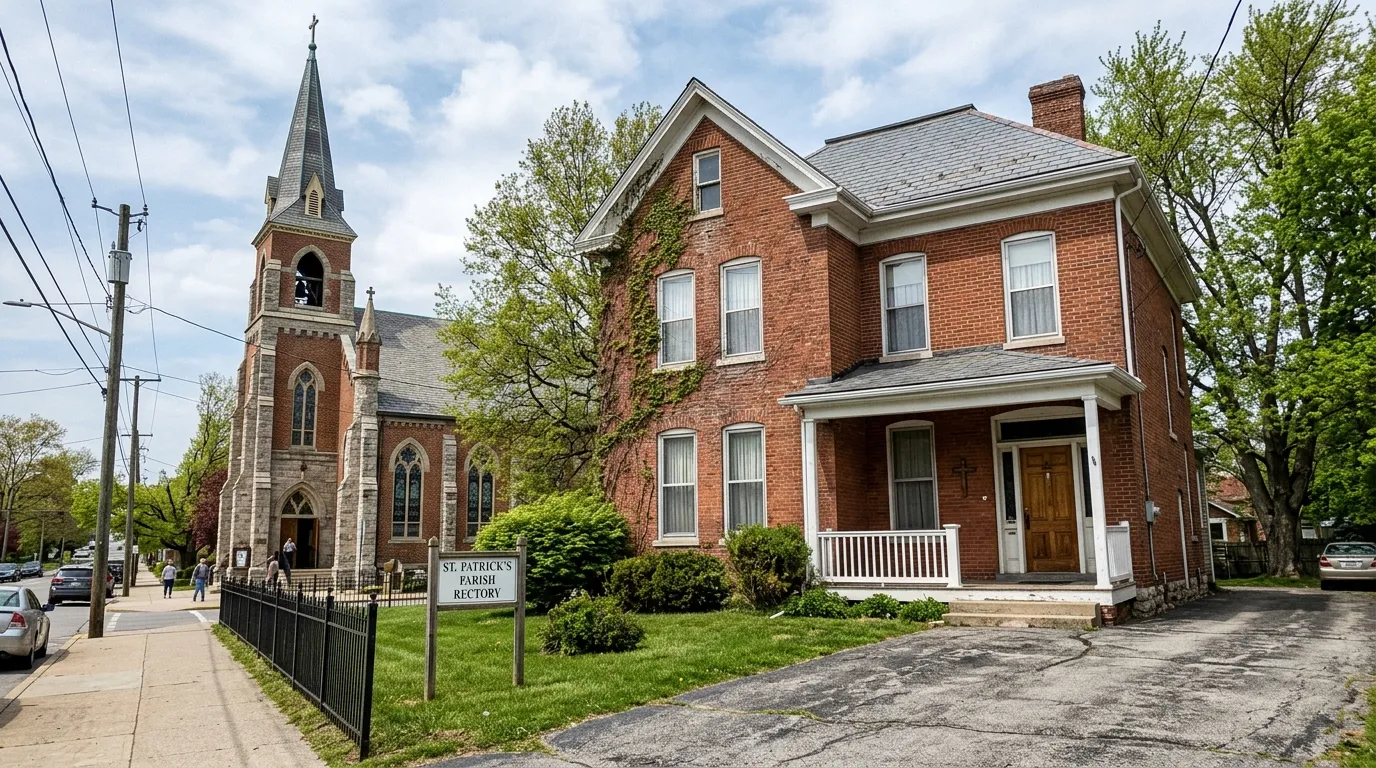
When walking past a Catholic church campus, visitors and parishioners often notice a stately brick or stone residence adjoining the sanctuary. Understanding the role of this unique ecclesiastical building requires examining historical traditions, sacramental responsibilities, and the canon law requirements governing clergy residences.
For many parish churchgoers, the rectory remains shrouded in quiet privacy. Yet behind its doors lies the operational engine of the parish: a space balancing quiet contemplation, priestly fraternity, administrative rigor, and around-the-clock sacramental readiness.
Whether responding to midnight calls for the Anointing of the Sick or managing parish sacramental archives, the Catholic rectory fulfills an indispensable pastoral role within the universal Church.
Contents
The Dual Role of the Modern Rectory
The Catholic Church has long recognized the necessity of providing dignified, secure housing for ordained ministers dedicated to celibate, full-time ministry. A parish rectory operates across two distinct spheres: private clerical sanctuary and public parish administration.
A Place of Rest and Fraternity
Parish priests shoulder intensive schedules involving daily celebrations of Holy Mass, confessions, hospital visitations, grief counseling, and educational instruction. The private quarters of the rectory offer a needed retreat for spiritual reflection, prayer, study, and rest away from constant public demands.
In multi-priest assignments where a pastor resides alongside parochial vicars (associate pastors), the rectory fosters clerical fraternity. Priests recite the Liturgy of the Hours together, share communal meals, and provide mutual spiritual support, mitigating the isolation that can accompany demanding pastoral vocations.
The Hub of Parish Operations
In many historical and urban parishes, the lower floor of the rectory serves as the parish administrative office. Lay professionals, parish secretaries, and business managers oversee accounting, facility operations, wedding scheduling, and cemetery records directly from these ground-level suites.
Here, official sacramental registries—meticulous historical ledgers containing records of every baptism, first communion, confirmation, marriage, and funeral celebrated at the parish—are securely cataloged under fireproof diocesan standards.
Canon Law and the Obligation of Residence
The location of a rectory directly next to the church is not accidental; it is rooted in formal Catholic canonical jurisprudence. Under Canon 533 §1 of the 1983 Code of Canon Law, a pastor is canonically bound to live within the parish boundaries, specifically in proximity to the church:
“A pastor is obliged to reside in a parish house near the church. In particular cases, however, if there is a just cause, the local ordinary can permit him to reside elsewhere, especially in a house common to several priests, provided that the performance of pastoral duties is properly and suitably provided for.”
— Code of Canon Law, Canon 533 §1
This canonical requirement guarantees that parishioners have continuous access to their pastor during critical life transitions and emergency situations. When a dying individual urgently requests the Viaticum (final Holy Communion) or the Sacrament of the Anointing of the Sick, the priest’s physical presence on the church campus ensures immediate sacramental response at any hour of the night.
Rectory vs. Parsonage vs. Manse: Clergy Housing Compared
Different Christian traditions use distinct terminology to describe their clergy residences, reflecting theological differences regarding ministry, celibacy, and ecclesiastical governance.
| Term | Primary Denominations | Occupant | Key Distinctions |
|---|---|---|---|
| Rectory | Roman Catholic, Anglican / Episcopal | Priest / Pastor (often celibate or shared with vicars) | Historically housed multiple priests; frequently incorporates parish administrative offices and reception rooms. |
| Parsonage | Methodist, Lutheran, United Church of Christ | Pastor and family | Designed as a domestic family home for married clergy; separate from church offices. |
| Manse | Presbyterian, Scottish Reformed, Baptist | Minister and family | Scottish legal origin from mansio; residential family dwelling provided by parish session or elders. |
| Vicarage | Church of England, Anglican Communion | Vicar (priest in charge) and family | Historical English ecclesiastical dwelling for a vicar who received lesser tithes. |
| Presbytery | Roman Catholic (UK, Ireland, Australia) | Catholic priests | Commonwealth terminology equivalent to the North American “rectory.” |
Inside the Daily Life of a Rectory
The daily rhythm within a Catholic rectory combines disciplined routine, spiritual contemplation, and responsive ministry. A typical daily schedule reflects structured monastic influences adapted for diocesan pastoral life:
- Morning Meditation and Office of Readings: Priests begin their morning in personal or communal prayer with the Breviary (Liturgy of the Hours), offering intercessions for their parish flock.
- Morning Liturgy: Vesting and walking into the church to offer the daily Holy Sacrifice of the Mass for scheduled intentions.
- Parish Office Hours: Meeting with engaged couples preparing for matrimony, conducting spiritual direction, and meeting with parish financial and pastoral councils.
- Pastoral Outreach: Visiting hospitalized parishioners, nursing homes, homebound elderly, and parochial schools during the afternoon.
- Evening Ministries and Emergencies: Leading RCIA classes, youth groups, or evening parish meetings, followed by nocturnal on-call sacramental coverage.
Ownership, Maintenance, and Diocesan Stewardship
A Catholic rectory is owned by the local parish as a juric entity under the stewardship of the diocese, not by the resident priest personally. Parish operational budgets fund maintenance, utilities, structural repairs, and food provisions. This ecclesiastical arrangement allows priests to receive a modest financial stipend while dedicating their energies fully to the spiritual welfare of the faithful.
Frequently Asked Questions
Can parishioners visit a Catholic rectory?
Yes, the administrative offices located on the ground floor are open to the public during normal parish business hours for mass cards, sacramental inquiries, and appointments. However, the upper residential floors are private living quarters accessible only by personal invitation of the clergy.
Do Catholic priests pay rent to live in the rectory?
No. Housing, utilities, and meals are provided by the parish as an integral part of clerical maintenance, enabling priests to subsist on modest stipends while dedicating themselves full-time to ministry.
What is the difference between a rectory and a presbytery?
They refer to the exact same ecclesiastical residence. “Rectory” is the predominant term in North America, while “presbytery” is the standard term used throughout the United Kingdom, Ireland, Australia, and New Zealand.
What happens to the rectory if a parish has no resident priest?
In clustered or merged parishes, rectories may be converted into parish ministry centers, food pantries, religious education classrooms, or rented to Catholic charities, depending on diocesan approval.
Get our latest guides, news, and insights highlighted in your Google Search & AI Overviews.
 PROSPERITY PRAYER