
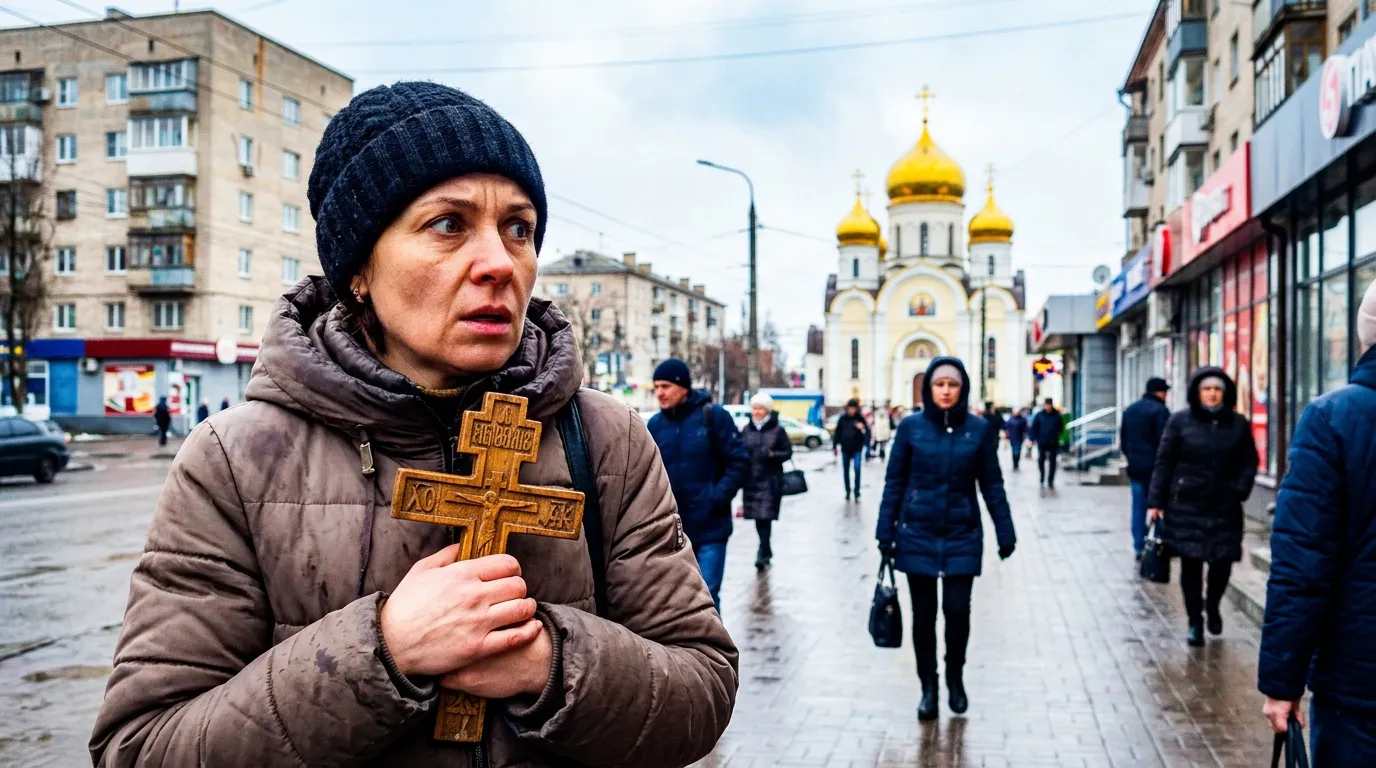
Is Ukraine Orthodox Christian? The Shocking 2026 Guide to the Church Split
The question "Is Ukraine Orthodox Christian?" touches not only upon centuries of spiritual tradition, but upon the very epicenter of contemporary European geopolitics, national identity, and global religious diplomacy. The short answer is an unequivocal yes: Ukraine is overwhelmingly an Eastern Orthodox nation, with approximately 70% to 75% of its population identifying with Eastern Orthodoxy.
However, behind this simple statistical majority lies one of the most complex, dramatic, and painful ecclesiastical divisions in modern history. Following the full-scale Russian invasion of Ukraine in February 2022, long-simmering religious tensions between competing Orthodox jurisdictions transformed into a defining conflict over national sovereignty, canon law, and spiritual independence from Moscow.
Below is an authoritative, historically grounded guide to the religious landscape of Ukraine, the roots of Kyivan Orthodoxy, the distinction between the competing churches, and the future of faith in Eastern Europe.
Contents
Kyivan Rus and the Spiritual Cradle of Eastern Slavs (AD 988)
To understand why Orthodoxy in Ukraine is so fiercely contested, one must understand that Kyiv—not Moscow—is the historic spiritual birthplace of Eastern Slavic Christianity. In AD 988, Grand Prince Volodymyr the Great (St. Vladimir) was baptized and subsequently baptized the inhabitants of Kyivan Rus in the waters of the Dnieper River in Kyiv, adopting Byzantine Christianity from the Ecumenical Patriarchate of Constantinople.
For centuries, the Metropolitan of Kyiv held primacy as the mother see of the region. Moscow did not even exist as a city in 988, and its patriarchate was not established until 1589. In 1686, under intense political pressure from the rising Tsardom of Russia, the Ecumenical Patriarchate issued a contentious decree granting the Patriarch of Moscow the right to ordain the Metropolitan of Kyiv. For over three centuries, Russian imperial and Soviet authorities used this arrangement to absorb Ukrainian ecclesiastical life into the Moscow Patriarchate—a historical subjugation that contemporary Ukrainian believers and historians have vigorously challenged since Ukraine regained national independence in 1991.
The Great Split: Deconstructing OCU vs. UOC
The Orthodox faithful in Ukraine are primarily divided between two ecclesiastical bodies whose acronyms appear deceptively similar to outsiders:
1. The Orthodox Church of Ukraine (OCU / ПЦУ)
- Formation and Canonical Status: Established in December 2018 during a unification council in Kyiv, the OCU united previous independent Ukrainian bodies (the Kyiv Patriarchate and the Ukrainian Autocephalous Orthodox Church). In January 2019, Ecumenical Patriarch Bartholomew of Constantinople—the "first among equals" in world Orthodoxy—formally presented a historic decree of autocephaly (Tomos) to the OCU, recognizing it as the canonical, fully independent 15th autocephalous Orthodox church in the world.
- Leadership and Orientation: Headed by Metropolitan Epiphanius of Kyiv and All Ukraine, the OCU uses modern Ukrainian in its liturgical services, strongly champions Ukrainian democratic sovereignty, supports the Ukrainian Armed Forces, and has been officially recognized by the Patriarchate of Constantinople, the Church of Greece, the Patriarchate of Alexandria, and the Church of Cyprus.
2. The Ukrainian Orthodox Church (UOC / УПЦ)
- Historical Background: Historically designated as the UOC-MP (Moscow Patriarchate), this body was the autonomous Ukrainian branch of the Russian Orthodox Church (ROC) led by Patriarch Kirill in Moscow. For decades, it possessed the largest number of registered parishes and historical monasteries, including the venerated Kyiv-Pechersk Lavra (Monastery of the Caves).
- The May 2022 Break from Moscow: Following the 2022 invasion and Patriarch Kirill’s vocal, blessing-laden support for the Russian military campaign, widespread outrage erupted among Ukrainian priests and parishioners. In May 2022, Metropolitan Onufriy convened a historic council in Feofaniya, voting to amend the church’s charter, remove all references to administrative dependence on Moscow, and declare "full independence and autonomy."
- Ongoing Legal and State Scrutiny: Despite the Feofaniya council, the Ukrainian government, security services (SBU), and critics argue that the UOC did not formally seek canonical autocephaly from Constantinople and retains latent canonical ties to the Moscow synod. In August 2024, the Ukrainian Parliament passed Law 8371, banning religious organizations with direct administrative ties to the Russian Federation, giving UOC parishes a regulatory framework to formally sever all links with Moscow or face judicial dissolution.
The Global Schism: Moscow vs. Constantinople
The struggle over Ukrainian Orthodoxy shattered the unity of the worldwide Eastern Orthodox communion. When Ecumenical Patriarch Bartholomew granted the Tomos of Autocephaly to Ukraine in 2018, Patriarch Kirill and the Holy Synod of the Russian Orthodox Church retaliated by severing full Eucharistic communion with the Ecumenical Patriarchate—creating the deepest theological rift in global Orthodoxy since the Great Schism of 1054.
The Russian Orthodox Church boycotted pan-Orthodox assemblies, established rival dioceses on the canonical territory of the Patriarchate of Alexandria in Africa, and framed the war in Ukraine in apocalyptic, holy-war terms, alienating hundreds of thousands of previously loyal Ukrainian believers.
Beyond Orthodoxy: Greek Catholics and Protestants in Ukraine
While Eastern Orthodoxy represents the vast majority of believers, Ukraine possesses a remarkably diverse and active religious mosaic:
- Ukrainian Greek Catholic Church (UGCC): Comprising approximately 8% to 10% of the population (concentrated heavily in western Ukrainian regions such as Lviv, Ternopil, and Ivano-Frankivsk), the UGCC follows the Byzantine Eastern liturgy and traditions (including married priesthood and Julian calendar feasts) while maintaining full theological communion with the Pope of Rome. Led by Major Archbishop Sviatoslav Shevchuk, the Greek Catholic Church has historically served as a formidable bulwark of Ukrainian national culture, language, and civic resistance.
- Protestants and Evangelicals: Representing approximately 2% to 3% of the population, Ukraine’s Protestant community—encompassing Baptists, Pentecostals, Seventh-day Adventists, and Lutherans—is recognized as the largest and most dynamic evangelical movement in Eastern Europe. Often referred to as the "Bible Belt of Eastern Europe," Ukrainian evangelicals operate vast international humanitarian relief hubs and chaplaincy networks during wartime.
- Roman Catholic (Latin Rite): Rooted primarily in historical Polish and Hungarian communities in Western Ukraine.
- Jewish and Muslim Communities: Ukraine has a rich Jewish heritage and is home to indigenous Crimean Tatar Muslims, both of whom participate actively in the All-Ukrainian Council of Churches and Religious Organizations (AUCCRO).
Comparative Matrix: Major Christian Churches in Ukraine
The following table summarizes the doctrinal, jurisdictional, and liturgical distinctives of Ukraine’s primary Christian traditions:
| Ecclesiastical Body | Primate / Head | Canonical Affiliation | Liturgical Tradition | Approximate Ukrainian Adherence |
|---|---|---|---|---|
| Orthodox Church of Ukraine (OCU) | Metropolitan Epiphanius | Autocephalous (Recognized by Constantinople) | Byzantine / Ukrainian language | ~54% – 60% of population |
| Ukrainian Orthodox Church (UOC) | Metropolitan Onufriy | Declared independent; historically Moscow Patriarchate | Byzantine / Church Slavonic & Ukrainian | ~14% – 18% of population |
| Ukrainian Greek Catholic Church (UGCC) | Major Archbishop Sviatoslav | Full Communion with the Holy See (Rome) | Byzantine / Ukrainian & Church Slavonic | ~8% – 10% of population |
| Ukrainian Evangelical / Baptist | Independent Union Councils | Global Baptist & Evangelical Fellowships | Contemporary & Traditional Protestant | ~2% – 3% of population |
| Roman Catholic Church (Latin Rite) | Episcopal Conference of Ukraine | Holy See (Vatican) | Western Latin Liturgy / Ukrainian & Polish | ~1% – 2% of population |
Frequently Asked Questions
Did Ukraine ban the Orthodox Church?
No. Ukraine did not ban Eastern Orthodoxy. The vast majority of Ukrainian citizens and soldiers are practicing Orthodox Christians. Legislation passed in 2024 (Law 8371) specifically restricts religious organizations affiliated with an aggressor state (the Russian Orthodox Church in Moscow). Parishes have full legal freedom to worship provided they sever administrative ties with the Moscow Patriarchate.
What is the difference between Russian and Ukrainian Orthodoxy?
Theologically and liturgically, both share the identical Eastern Orthodox faith, sacraments, and patristic creeds. The divide is jurisdictional, ecclesiological, and political: the Orthodox Church of Ukraine (OCU) affirms national autocephaly granted by the Ecumenical Patriarchate, while the Russian Orthodox Church promotes the concept of Russkiy Mir ("Russian World"), claiming spiritual hegemony over Ukraine.
Can visitors attend Orthodox services in Ukraine?
Yes. Both OCU and UOC churches welcome visitors to attend the Divine Liturgy. Modest dress (headcoverings for women and modest attire for men) is customary when entering historical sanctuaries and monasteries.
Explore our related directories of Christian traditions: Eastern Orthodox Heritage | Catholic Churches Hub | Biblical Faith & Creeds.
Get our latest guides, news, and insights highlighted in your Google Search & AI Overviews.
 THE SECRET ELITES DON'T WANT YOU TO KNOW