
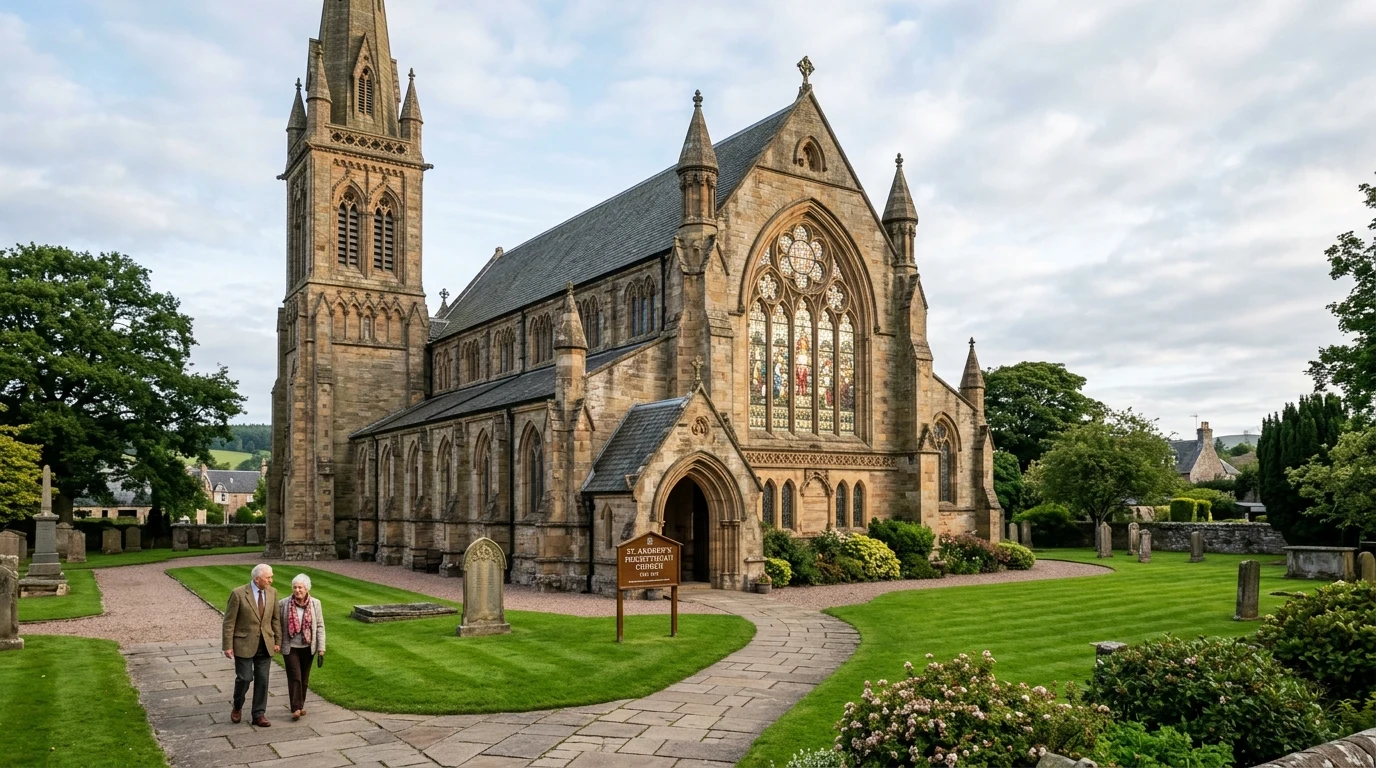
Canterbury Presbyterian Church — History | Western Church
✨ This article was AI edited. Editorial responsibility: WesternChurch.net.
Canterbury Presbyterian Church represents the historic Reformed ecclesiastical heritage within the Canterbury region and across global diaspora settlements, characterized by Westminster Confessional theology, presbyterial elder-led governance, reverent expository preaching, and active community outreach rooted in nineteenth-century Scottish and Scots-Irish migration.
The Presbyterian tradition carries a rich theological and institutional legacy shaped by the Protestant Reformation in Geneva and Scotland. When Scottish and Scots-Irish settlers established communities across the English-speaking world—from regional Canterbury settlements in New Zealand and Australia to historic Canterbury parishes in Great Britain and North America—they founded congregations rooted in the Westminster Standards, biblical eldership, and vibrant congregational song. The story of Canterbury Presbyterian Church communities illustrates how Reformed convictions adapted to diverse pastoral frontiers while preserving historic Presbyterian identity.
Contents
Origins and Theological Foundations
Presbyterianism takes its name from the Greek word presbyteros (elder), designating a church governed not by bishops (episcopal) or congregational votes alone (congregationalist), but by representative courts of teaching and ruling elders. The theological backbone of Canterbury Presbyterian congregations rests upon the Reformed tradition articulated by John Calvin, John Knox, and the Westminster Assembly of Divines (1643–1649).
Core doctrinal convictions include:
- The Sovereignty of God: Affirming God’s providential guidance over all human history, redemption, and creation.
- Covenant Theology: Viewing God’s redemptive plan as an overarching covenant of grace uniting the Old and New Testaments.
- The Authority of Scripture: Recognizing the Old and New Testaments as the infallible, supreme rule of faith and practice.
- Regulative Principle of Worship: Confining public worship practices strictly to what is commanded or clearly warranted by holy scripture.
Historic Settlements and Regional Development
In regions such as Canterbury, New Zealand—where organized migration in the mid-nineteenth century brought waves of Scottish Presbyterian and English Anglican pioneers—Presbyterian churches became vital civic hubs. While Anglican pioneers planned the Canterbury Association settlement around Christchurch Cathedral, Scottish Presbyterians quickly established influential rural and urban parishes across the Canterbury Plains, including Saint Andrew’s, Saint Paul’s, and regional kirks.
Similarly, in the historic town of Canterbury in Kent, England, and in various Canterbury townships across the United States (including Connecticut and Pennsylvania), Presbyterian assemblies emerged as centers of educational endeavor, temperance, and social benevolence. These churches established Sunday schools, founded grammar academies, and formed mutual-aid societies that sheltered families navigating industrial transitions.
Architectural Design of Historic Presbyterian Kirks
Unlike medieval cathedrals designed for processions and visual sacramentality, historic Presbyterian architecture reflects a theology centered on the proclamation of the Word of God:
- Centrality of the Pulpit: The elevated wooden pulpit is positioned prominently at the front and center of the sanctuary, signifying that the preaching of scripture is the primary means of grace.
- Communion Table: A simple, dignified wooden table is placed below the pulpit rather than an ornate high altar, underscoring the commemorative and covenantal nature of the Lord’s Supper.
- Acoustic Resonance for Psalmody: High-vaulted timber ceilings and open galleried balconies engineered for four-part harmony congregational singing, historically without organs (a cappella metrical psalms), transitioning to pipe organs in the late nineteenth century.
- Subdued Stained Glass: Decorative windows featuring geometric motifs, pastoral scenes, or biblical covenants rather than patron saint veneration.
Presbyterian Church Governance: The Court System
Canterbury Presbyterian Church bodies operate according to a four-tier judicial and administrative hierarchy that ensures accountability, mutual care, and doctrinal fidelity:
| Ecclesiastical Court | Composition | Primary Jurisdiction | Functional Role |
|---|---|---|---|
| Kirk Session | Pastor (Teaching Elder) and local Ruling Elders | Individual local congregation | Pastoral oversight, admission to communion, worship order, and parish benevolence. |
| Presbytery | Ministers and representative elders from regional churches | Regional district (e.g., Canterbury Presbytery) | Licensing candidates for ministry, ordaining pastors, arbitrating appeals, and planting new churches. |
| Synod | Delegates from multiple contiguous presbyteries | Provincial or multi-regional territory | Intermediate court reviewing presbytery decisions and organizing institutional charities. |
| General Assembly | Elected ministerial and lay commissioners nationwide | Entire national denomination | Highest court of appeal, doctrinal adjudication, mission policy, and ecumenical relations. |
Worship Life and Contemporary Ministry
Today, Canterbury Presbyterian congregations balance their venerable heritage with contemporary pastoral relevance. Sunday services typically feature:
- Call to Worship and Prayer of Adoration: Centering hearts on the majesty and holiness of God.
- Corporate Confession and Assurance of Pardon: Acknowledging human fallenness and receiving Christ’s gracious promise of forgiveness.
- Scripture Proclamation and Expository Sermon: Rigorous 25-to-35-minute verse-by-verse scriptural exposition applied to modern ethical and spiritual challenges.
- Sacrament of the Lord’s Supper: Celebrated weekly, monthly, or quarterly with bread and the fruit of the vine distributed to believers.
- Benediction and Sending: Dismissing the congregation into their daily vocations as witnesses of Christ’s kingdom.
Many congregations also sponsor vibrant youth groups, theological reading societies, marriage enrichment workshops, and local food pantries. For readers interested in comparative ecclesiastical history, compare Presbyterian church governance with our detailed studies on ancient Orthodox ecclesiology, sacramental theology and the Lord’s Supper, and the architectural history of historic Western parishes.
Frequently Asked Questions
What is the core belief of a Presbyterian church?
Presbyterian churches belong to the Reformed branch of Protestantism. They hold to the authority of the Bible, the sovereignty of God, salvation by grace alone through faith alone in Jesus Christ, and covenantal theology, typically summarized in the Westminster Confession of Faith.
How is a Presbyterian church governed?
Presbyterian churches are led by elders (presbyters). The local leadership team, called the Session, consists of the pastor (teaching elder) and elected congregational members (ruling elders), who report to a regional council called the Presbytery.
What is the difference between Presbyterian and Anglican churches?
While both share historic Protestant heritage from the British Isles, Anglicans (such as the Church of England) are governed by bishops in an episcopal hierarchy and follow the Book of Common Prayer, whereas Presbyterians are governed by elder courts (presbyteries) and emphasize Reformed confessions and pulpit-centered worship.
Are visitors welcome to attend Canterbury Presbyterian Church services?
Yes. Presbyterian congregations operate open doors to visitors, families, and seekers from all religious and cultural backgrounds. Ushers and members welcome guests at the door and provide order-of-service bulletins for easy participation.
Get our latest guides, news, and insights highlighted in your Google Search & AI Overviews.


 PROSPERITY PRAYER